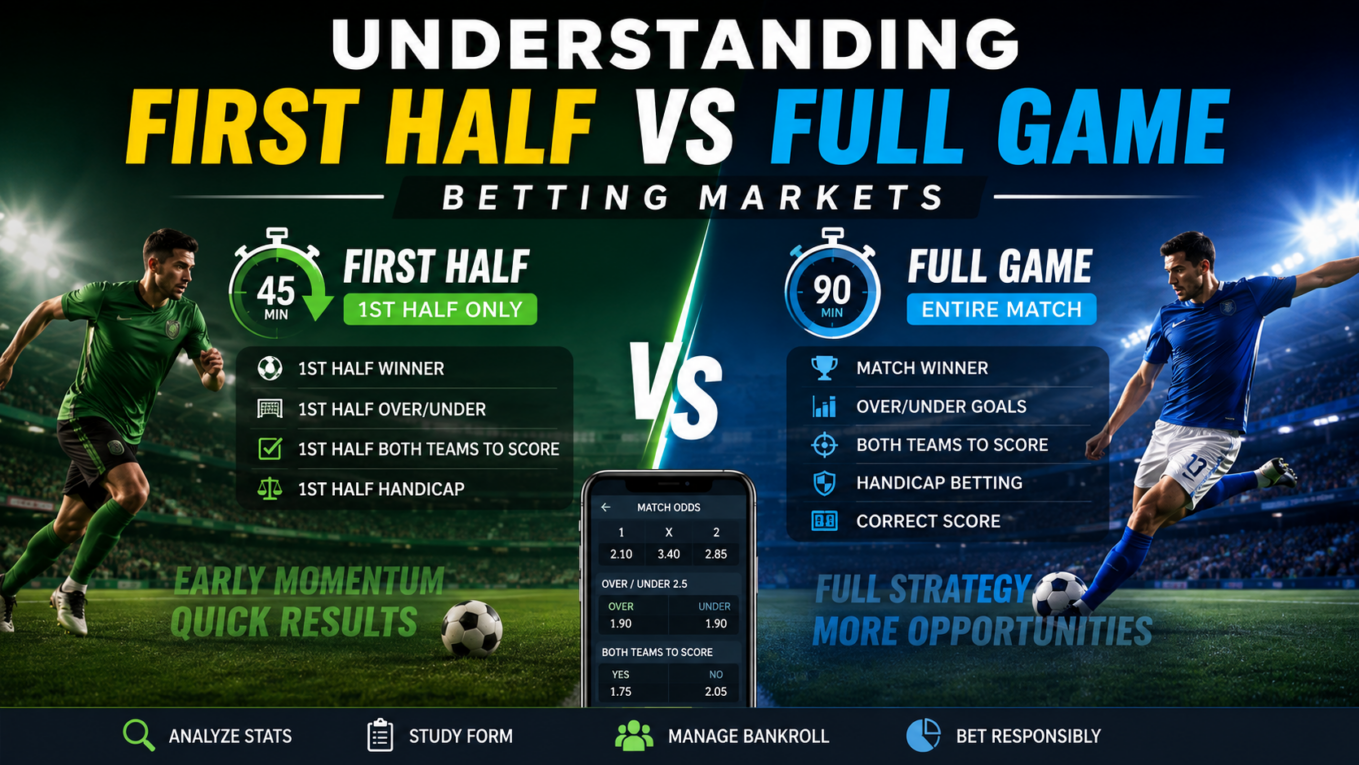
Sports betting offers many ways to enjoy a match beyond simply picking the winner. Among the most popular options are First Half betting and Full Game betting. While they may seem similar at first, these markets require different strategies, risk management, and match analysis.
Many beginners jump into these markets without understanding how they work, which often leads to avoidable mistakes. Knowing when to focus on the opening half of a game and when to evaluate the entire match can significantly improve your betting decisions.
In this guide, we’ll explain the differences between First Half and Full Game betting markets, their advantages, potential risks, and how to decide which option better suits your betting style.
What Is First Half Betting?
First Half betting focuses only on the outcome of the opening half of a sporting event. Once the first half ends, the bet is settled regardless of what happens later in the match.
For example, in football, you can place bets on:
- First Half Match Winner
- First Half Over/Under Goals
- First Half Both Teams to Score
- First Half Asian Handicap
This market is especially popular among bettors who closely follow team tactics, starting lineups, and early-game momentum.
What Is Full Game Betting?
Full Game betting covers the entire duration of the match, including regulation time unless stated otherwise by the sportsbook.
Common Full Game markets include:
- Match Winner
- Total Goals
- Handicap Betting
- Both Teams to Score
- Correct Score
Unlike First Half betting, this market considers how teams perform throughout the entire game, including tactical adjustments, substitutions, and overall fitness.
Key Differences Between First Half and Full Game Betting
1. Betting Duration
The biggest difference is the time period covered.
- First Half bets end after the opening 45 minutes (or equivalent in other sports).
- Full Game bets remain active until the final whistle.
This difference changes how you analyze the game before placing a wager.
2. Team Strategy
Many teams begin matches cautiously before increasing their attacking intensity later.
For example:
- Defensive teams may keep the score level in the first half.
- Strong attacking sides often dominate after halftime.
- Some clubs improve dramatically after tactical changes during the break.
Understanding a team’s playing style helps identify which market offers better value.
3. Impact of Substitutions
Substitutions rarely influence First Half bets because most managers make changes after halftime.
Full Game markets, however, are heavily affected by:
- Fresh attacking players
- Tactical formations
- Injury replacements
- Fatigue during the final stages
Ignoring these factors can lead to poor betting decisions.
4. Match Momentum
Early momentum does not always determine the final result.
A team dominating possession in the first half may struggle after the break if:
- Key players tire
- Opponents adjust tactics
- Weather conditions change
- Red cards alter the game
This makes Full Game betting more dynamic but also more unpredictable.
Advantages of First Half Betting
Many experienced bettors prefer First Half markets because they focus on the opening stages of the match.
Benefits include:
- Less impact from substitutions
- Faster settlement of bets
- Easier analysis of starting lineups
- Reduced influence of late-game chaos
These markets are particularly useful when one team consistently starts matches aggressively.
Advantages of Full Game Betting
Full Game markets offer more opportunities because they include every minute of regulation time.
Advantages include:
- More betting options
- Greater statistical history
- Better odds on certain markets
- Teams have enough time to recover from a slow start
Many bettors prefer Full Game markets because they provide a broader picture of team quality.
When Should You Choose First Half Betting?
First Half betting may be the better option when:
- A team regularly scores early goals.
- Strong home teams dominate from kickoff.
- Historical data shows fast starts.
- Both teams usually play cautiously after taking the lead.
Studying recent performances is essential before making these decisions.
If you’re looking to improve your sports betting knowledge with practical guides and market insights, online cricket betting tips can help you understand different betting strategies and market trends without relying solely on short-term results.
When Is Full Game Betting the Better Choice?
Consider Full Game betting when:
- Teams frequently score in the second half.
- Managers are known for tactical adjustments.
- Squad depth is an important factor.
- Fitness levels create late-game advantages.
League trends also matter. Some competitions consistently produce more goals after halftime.
Common Mistakes Bettors Make
Avoid these common errors when betting on either market.
Ignoring Team Statistics
Don’t rely only on league standings.
Instead, review:
- First Half scoring records
- Second Half goal trends
- Home and away performances
- Recent form
Chasing Bigger Odds
Higher odds don’t always mean better value.
Successful betting focuses on probability rather than excitement.
Overreacting to Recent Matches
One impressive performance doesn’t guarantee another.
Always analyze a larger sample of matches before making predictions.
Forgetting Match Context
Factors like injuries, weather, fixture congestion, and tournament importance can completely change how a game unfolds.
Which Market Is Better for Beginners?
There isn’t a single answer.
First Half betting is generally easier because fewer variables affect the outcome.
Full Game betting provides more opportunities but requires deeper analysis of:
- Squad depth
- Tactical flexibility
- Player fitness
- Historical performance trends
The best approach is to understand both markets and choose the one that fits the specific match rather than betting the same way every time.
Responsible Betting Matters
No betting strategy guarantees consistent profits. Markets are unpredictable, and even the strongest statistical trends can fail on any given day.
Managing your bankroll, avoiding emotional decisions, and betting only within your limits are essential habits for long-term success.
For readers interested in learning more about betting terminology and how different wagering markets work, the Sports Betting guide offers a useful overview of common betting concepts.
FAQs
Is First Half betting easier than Full Game betting?
For many beginners, yes. First Half betting involves fewer variables because substitutions and late tactical changes have less impact.
Can I use the same strategy for both markets?
Not always. Each market requires different analysis based on timing, team behavior, and historical performance.
Which market usually has better odds?
It depends on the event and sportsbook. Full Game markets generally offer more betting options, while First Half markets may provide value when teams have predictable starts.
Should I focus on team form before placing a bet?
Absolutely. Recent form, head-to-head records, injuries, home and away performances, and scoring patterns all help improve betting decisions.
Are First Half betting markets available for every sport?
Most major sports, including football, basketball, and cricket (through innings or session-based markets), offer similar early-game betting options, although available markets vary by sportsbook.
Final Thought
Understanding the difference between First Half and Full Game betting markets can help you make smarter and more informed decisions. Rather than choosing one market for every match, evaluate each game’s unique circumstances, including team tactics, recent form, and historical trends. Consistent research and disciplined bankroll management are far more valuable than chasing high odds. Over time, selecting the right market for the right match can become one of the most effective ways to build a more thoughtful and responsible betting approach.