Cricket Training and Performance
Cricket has evolved significantly over the last decade. Modern players no longer rely solely on natural talent; instead, structured training programs, sports psychology, rehabilitation exercises, and workload management play a crucial role in improving performance. Recent research highlights that targeted training interventions can enhance physical fitness, mental resilience, injury prevention, and overall match performance.
Whether it is a professional international cricketer or an aspiring young player, effective training methods have become essential for achieving consistent results on the field.
The Growing Importance of Scientific Training in Cricket
Cricket demands a combination of strength, endurance, flexibility, coordination, and mental focus. Players perform repetitive movements such as bowling, batting, throwing, and fielding, which place significant stress on the body. Scientific studies suggest that structured training programs help athletes improve movement efficiency, reduce fatigue, and minimize the risk of injuries.
According to research published in Scientific Reports, well-designed training interventions can positively influence cricket-specific performance indicators, including speed, agility, strength, and technical execution. These improvements directly impact a player’s ability to perform under competitive conditions.
For more insights into sports performance research, visit the official website of Nature Scientific Reports.
Psychological Training: The Hidden Performance Booster
Physical fitness alone is not enough to succeed in modern cricket. Mental preparation has become equally important, especially in high-pressure situations such as international tournaments and crucial match moments.
A recent study published in Frontiers in Psychology emphasizes the relationship between psychological training and athletic performance. Techniques such as visualization, goal setting, concentration drills, and stress management can improve decision-making and confidence during competition.
Cricketers frequently face pressure from spectators, media, and match situations. Mental conditioning helps players remain calm, maintain focus, and execute skills effectively when it matters most. Teams across the world are increasingly employing sports psychologists to help athletes build mental resilience and improve consistency.
Injury Prevention Through Specialized Training Programs
One of the biggest challenges in cricket is preventing injuries caused by repetitive overhead movements. Fast bowlers, fielders, and wicketkeepers are particularly vulnerable to shoulder and upper-body injuries due to constant throwing actions.
A systematic review published in Cureus examined the effectiveness of the Thrower’s Ten Program, a specialized exercise routine designed for overhead athletes. The review found that the program improves shoulder stability, range of motion, muscular endurance, and sport-specific performance. It also reduces the likelihood of shoulder-related injuries among athletes involved in throwing sports.
The program focuses on strengthening the rotator cuff muscles, improving scapular stability, and enhancing overall shoulder function. Because it requires minimal equipment and can be integrated into regular training schedules, it has become a practical solution for athletes seeking both rehabilitation and injury prevention.
For players and coaches, incorporating evidence-based injury prevention exercises can significantly reduce time lost due to injuries and improve long-term performance.
Balancing Training and Recovery
Another important lesson emerging from modern sports science is the need to balance training intensity with adequate recovery. Excessive training without sufficient rest can lead to fatigue, decreased performance, and a higher risk of injury.
The discussion surrounding Australian cricketer Usman Khawaja highlighted how athlete health and physical management remain closely monitored in elite cricket. Cricket Australia clarified that speculation linking Khawaja’s back stiffness to recreational golf was unfounded, emphasizing that athlete health issues are often more complex than public assumptions suggest.
This incident reinforces an important principle in sports science: performance optimization requires proper workload management, recovery strategies, and individualized training plans. Recovery methods such as mobility work, stretching, sleep optimization, hydration, and physiotherapy are now considered essential components of professional cricket preparation.
How Modern Training Improves Cricket Performance
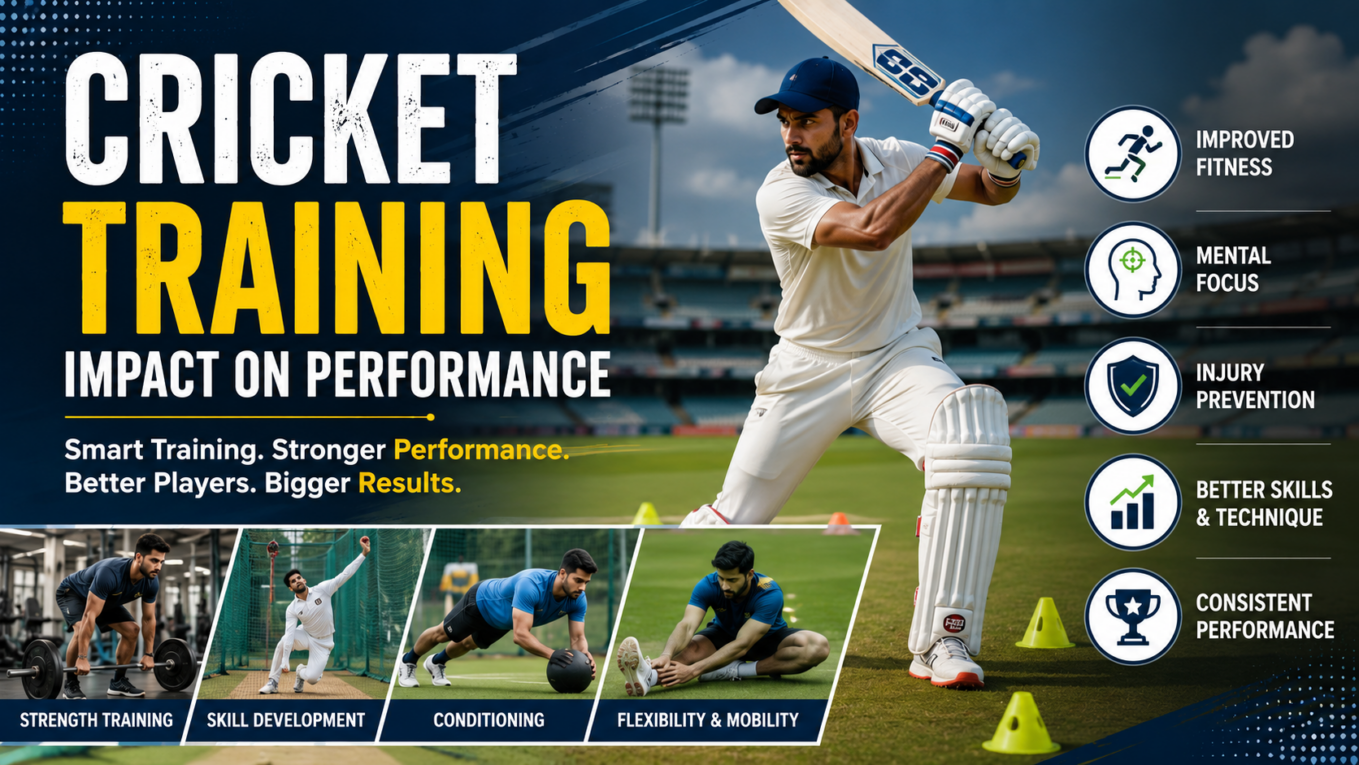
The combination of physical conditioning, psychological preparation, injury prevention, and recovery management creates a complete performance framework for cricketers. Research consistently demonstrates that players who follow structured training programs experience benefits such as:
- Improved strength and power generation.
- Better agility and fielding performance.
- Enhanced bowling and throwing efficiency.
- Reduced injury risk.
- Greater mental resilience under pressure.
- Faster recovery between matches and training sessions.
These benefits not only improve individual performance but also contribute to overall team success.
Practical Training Recommendations for Cricketers
Players looking to improve their performance should focus on the following areas:
- Follow a structured strength and conditioning program.
- Include shoulder stability exercises such as the Thrower’s Ten routine.
- Practice mental training techniques regularly.
- Monitor workload and avoid overtraining.
- Prioritize sleep, nutrition, and hydration.
- Use recovery sessions as seriously as practice sessions.
- Regularly assess performance metrics and adjust training accordingly.
A holistic approach often delivers better results than focusing on a single aspect of training.
FAQs
How does training improve cricket performance?
Training enhances physical fitness, technical skills, mental toughness, and injury resistance. Together, these factors help players perform more consistently during matches.
What is the Thrower’s Ten Program?
The Thrower’s Ten Program is a shoulder-strengthening exercise routine designed for athletes who perform repetitive throwing movements. It improves shoulder stability, mobility, and endurance while helping prevent injuries.
Why is mental training important in cricket?
Mental training improves concentration, confidence, emotional control, and decision-making. These skills become particularly valuable during high-pressure match situations.
Can overtraining reduce cricket performance?
Yes. Excessive training without proper recovery can cause fatigue, increase injury risk, and negatively impact performance. Balanced workload management is essential.
What role does recovery play in cricket training?
Recovery allows the body to repair and adapt to training stress. Proper recovery improves long-term performance, reduces injuries, and helps athletes maintain peak condition throughout the season.
Final Thoughts
The future of cricket performance lies in evidence-based training methods. Modern research shows that success on the cricket field is influenced by much more than technical skill alone. Physical conditioning, psychological preparation, injury prevention programs, and recovery strategies all contribute to an athlete’s ability to perform consistently at a high level.
As cricket becomes increasingly competitive, players and coaches who embrace scientific training approaches will gain a significant advantage. By combining smart training with proper recovery and mental preparation, cricketers can maximize their potential while minimizing injury risks, ultimately achieving greater success throughout their careers.