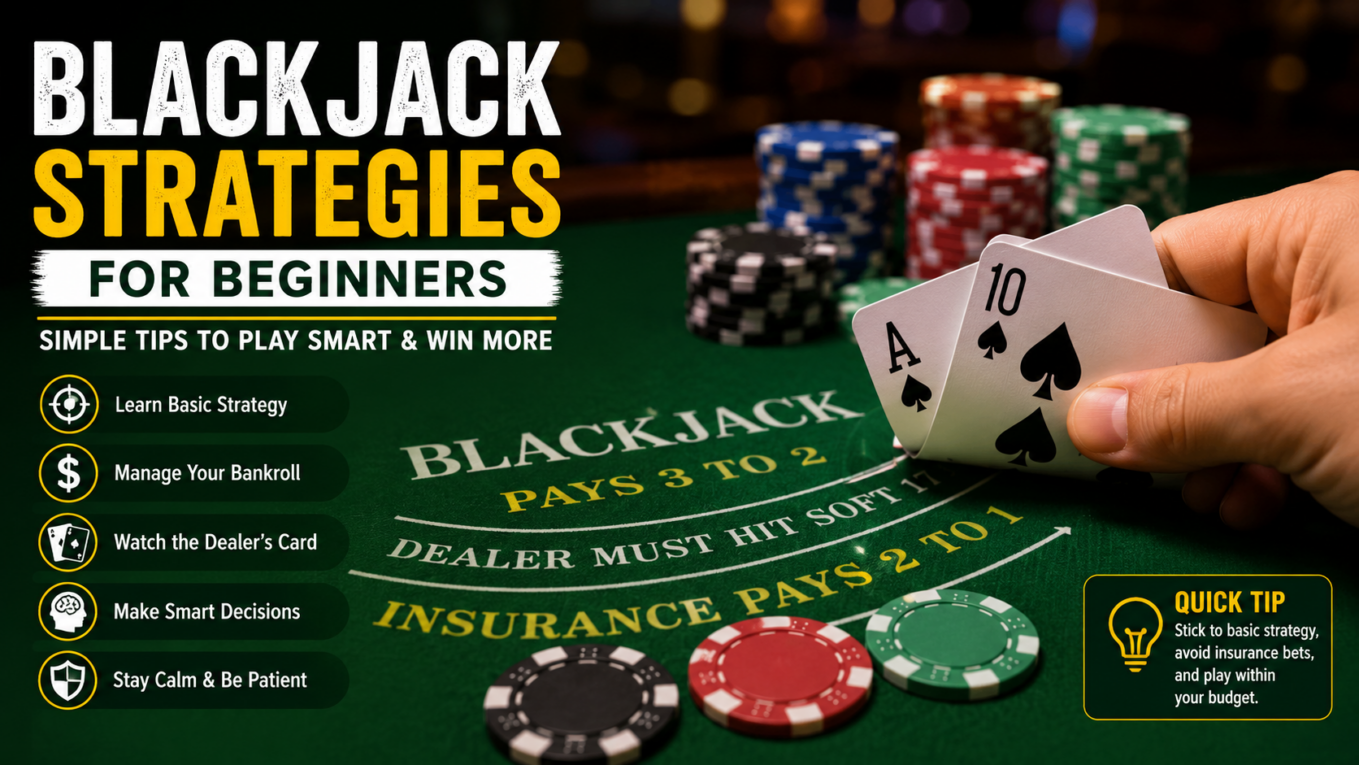
Blackjack Strategies for Beginners: Simple Tips to Improve Your Game
Blackjack is one of the most popular casino games in the world because it combines luck with skill. Unlike many casino games that rely purely on chance, blackjack gives players the opportunity to improve their odds by using smart strategies and making better decisions at the table. For beginners, understanding the basics of blackjack strategy can make the game more enjoyable and help reduce costly mistakes.
In this guide, we will explore beginner-friendly blackjack strategies, explain important rules, and share practical tips that can help new players gain confidence at the table.
Understanding the Basics of Blackjack
Before learning advanced strategies, beginners should first understand how blackjack works. The main goal of blackjack is simple: beat the dealer by having a hand value closer to 21 without going over.
Here are the card values in blackjack:
- Number cards are worth their face value.
- Face cards (King, Queen, Jack) are worth 10.
- Aces can count as either 1 or 11.
Each player receives two cards, and the dealer also gets two cards. Players then choose actions such as:
- Hit – Take another card.
- Stand – Keep the current hand.
- Double Down – Double the bet and receive one final card.
- Split – Divide matching cards into two separate hands.
Learning when to make these decisions is the foundation of blackjack strategy.
Why Strategy Matters in Blackjack
Many beginners assume blackjack is purely based on luck, but strategy plays a major role. Using the correct moves can lower the house edge significantly. Casinos always have a slight advantage, but smart players can improve their chances by following proven blackjack strategies.
Unlike slot machines or roulette, blackjack allows players to influence outcomes through decision-making. Even small improvements in strategy can make a difference over time.
Learn Basic Blackjack Strategy
One of the best things beginners can do is learn basic blackjack strategy charts. These charts are based on mathematics and probability, showing the best move for every possible hand combination.
For example:
- Always stand when your hand totals 17 or higher.
- Hit when your hand is 8 or lower.
- Split Aces and 8s.
- Never split 10s.
These rules may seem simple, but they are designed to reduce losses and maximize winning opportunities.
Using a strategy chart while practicing online is a great way for beginners to build confidence before playing in a real casino.
Manage Your Bankroll Carefully
Bankroll management is one of the most overlooked blackjack strategies for beginners. Even skilled players can lose if they do not manage their money properly.
Here are some simple bankroll tips:
- Set a budget before playing.
- Never chase losses.
- Avoid betting too much on a single hand.
- Divide your bankroll into smaller session limits.
For example, if you have $100 for the night, avoid placing $25 bets every hand. Smaller bets help you stay in the game longer and reduce the risk of losing everything quickly.
Good bankroll management keeps blackjack fun and prevents emotional decisions.
Avoid Insurance Bets
Insurance is one of the most common traps for beginner blackjack players. When the dealer shows an Ace, casinos offer insurance as a side bet in case the dealer has blackjack.
Although it sounds helpful, insurance usually benefits the casino more than the player. Most blackjack experts recommend avoiding insurance bets unless you are highly experienced with card counting.
For beginners, sticking to the main game is the smarter choice.
Understand When to Double Down
Doubling down is one of the most powerful moves in blackjack when used correctly. It allows players to double their original bet after receiving the first two cards.
Beginners should usually double down in situations such as:
- Hand total of 11 against most dealer cards.
- Hand total of 10 when the dealer has a weaker card.
- Soft 16, 17, or 18 in favorable situations.
Doubling down increases potential profits when the odds are in your favor.
Pay Attention to the Dealer’s Upcard
A key blackjack strategy is focusing on the dealer’s visible card, known as the upcard. The dealer’s card helps determine whether you should play aggressively or cautiously.
Weak Dealer Cards
Dealer cards from 2 to 6 are considered weak because the dealer has a higher chance of busting.
Strong Dealer Cards
Cards like 7, 8, 9, 10, and Ace are considered strong because the dealer has better chances of building a strong hand.
Understanding the dealer’s position helps beginners make smarter decisions during the game.
Practice Online Before Playing for Real Money
Online blackjack is an excellent way for beginners to practice strategies without pressure. Many websites and apps offer free blackjack games where players can learn the rules and test strategies.
Practicing online helps beginners:
- Understand game flow.
- Memorize strategy charts.
- Build confidence.
- Improve decision-making speed.
The more you practice, the more natural blackjack decisions become.
Stay Calm and Avoid Emotional Decisions
One of the biggest mistakes beginners make is letting emotions control their gameplay. Winning streaks can create overconfidence, while losing streaks often lead to risky betting.
Successful blackjack players stay calm and disciplined. They stick to their strategy regardless of short-term results.
Remember, blackjack is a long-term game of probabilities, not emotions.
Common Beginner Mistakes to Avoid
Here are a few mistakes new blackjack players should avoid:
- Ignoring basic strategy charts.
- Taking insurance bets frequently.
- Chasing losses with larger bets.
- Playing without a budget.
- Splitting 10s unnecessarily.
- Standing on weak hands against strong dealer cards.
Avoiding these common errors can improve your overall blackjack experience.
FAQs
Is blackjack a game of skill or luck?
Blackjack involves both skill and luck. While card distribution is random, strategic decisions can improve your chances of winning.
What is the safest blackjack strategy for beginners?
Using a basic blackjack strategy chart is the safest and most effective approach for beginners.
Should beginners use card counting?
Card counting is difficult and not recommended for beginners. It requires practice, concentration, and experience.
What is the best bankroll strategy for blackjack?
Set a fixed budget, use smaller bets, and never chase losses after a losing streak.
Can I practice blackjack for free?
Yes, many online casinos and gaming apps offer free blackjack games for practice.
Final Thoughts
Blackjack is one of the few casino games where smart decisions can genuinely improve your odds. For beginners, learning basic strategy, managing your bankroll, and staying disciplined are the most important steps toward becoming a better player.
While no strategy guarantees consistent wins, understanding how blackjack works can make the game more enjoyable and reduce unnecessary losses. Start with small bets, practice regularly, and focus on making informed decisions instead of relying purely on luck.
With patience and consistent learning, beginners can develop the confidence needed to enjoy blackjack responsibly and strategically.