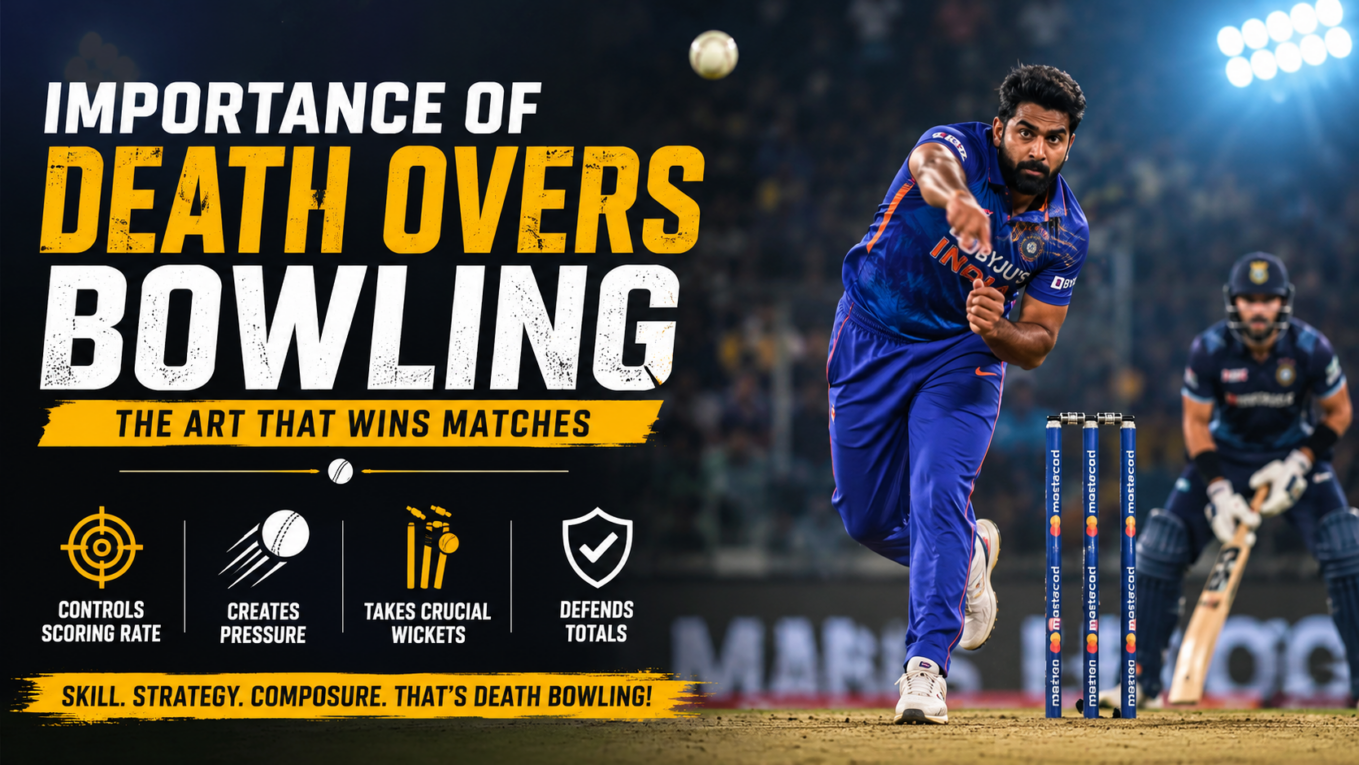
Importance of Death Overs Bowling in Cricket
Cricket has evolved significantly over the years, especially in limited-overs formats such as T20 and One Day Internationals (ODIs). While explosive batting often grabs headlines, one aspect of the game consistently influences match outcomes behind the scenes: death overs bowling. The final overs of an innings are often the most intense and pressure-filled moments in cricket, where a single over can completely change the course of a match.
In modern cricket, death bowling is no longer just a skill—it is a specialized art form. Teams invest heavily in developing bowlers who can execute plans under pressure and restrict aggressive batters during the final stages of an innings.
What Are Death Overs in Cricket?
Death overs refer to the final phase of an innings when batters attempt to score as many runs as possible in a short period. In T20 cricket, death overs generally begin from the 16th over and continue until the 20th over. In ODI cricket, they typically cover overs 41 to 50. During this period, scoring rates increase dramatically as batters take more risks to maximize the total.
These overs are often called “slog overs” because batters focus on attacking every scoring opportunity. As a result, bowlers face immense pressure and must rely on precision, strategy, and mental toughness to succeed.
Why Death Overs Bowling Is So Important
1. It Directly Influences Match Results
The difference between a good and poor death bowling performance can easily be 20 to 30 runs. In modern T20 cricket, where matches are frequently decided by small margins, those extra runs can determine whether a team wins or loses.
Even a well-controlled innings can be ruined if bowlers fail to execute in the final overs. Similarly, exceptional death bowling can defend seemingly average totals.
2. High-Pressure Situations Demand Elite Skills
Unlike the powerplay or middle overs, death overs provide very little room for error. Batters are looking to attack every delivery, and even a slight mistake in line or length can result in boundaries or sixes.
This is why death bowling specialists are among the most valuable players in franchise leagues such as the Indian Premier League (IPL), Big Bash League (BBL), and international tournaments.
3. Momentum Can Shift Instantly
Cricket is often described as a game of momentum, and nowhere is this more evident than during the death overs. A single wicket, a dot-ball sequence, or a well-executed over can instantly put pressure on the batting side.
Conversely, one expensive over can completely shift momentum in favor of the opposition. This ability to influence momentum makes death bowling a crucial tactical element in modern cricket.
Key Skills Required for Effective Death Bowling
Accurate Yorkers
The yorker remains one of the most effective deliveries in death overs. By pitching the ball at the batter’s feet, bowlers limit the opportunity for powerful shots.
Many legendary death bowlers, including Jasprit Bumrah and Lasith Malinga, have built their reputations on their ability to consistently execute yorkers under pressure.
Slower Balls and Variations
Modern batters prepare extensively for pace. To counter this, bowlers use slower deliveries, cutters, and off-pace variations to disrupt timing.
A well-disguised slower ball often forces batters into mistimed shots, leading to catches or dot balls.
Mental Strength
Death bowling is as much a mental challenge as a technical one. Bowlers must remain calm even after being hit for boundaries. The ability to recover instantly and stick to a plan separates elite death bowlers from average performers.
Tactical Awareness
Successful death bowlers understand match situations, field placements, batter strengths, and scoring patterns. They constantly adapt their strategies based on changing conditions.
The Role of Analytics in Death Bowling
Modern cricket teams increasingly rely on data analytics to improve death-over performance. Teams study batter scoring zones, preferred shots, and weaknesses to develop bowling plans.
Organizations such as the International Cricket Council (ICC) and professional franchise teams utilize advanced performance analysis to optimize player strategies and match planning.
Famous Death Bowlers Who Mastered the Art
Jasprit Bumrah
Known for his unique action, pinpoint yorkers, and calm temperament, Jasprit Bumrah is widely regarded as one of the best death bowlers in modern cricket.
Lasith Malinga
The Sri Lankan legend revolutionized death bowling with his deadly toe-crushing yorkers. His ability to deliver under pressure made him one of the most successful T20 bowlers in history.
Dwayne Bravo
Bravo’s mastery of slower balls and variations helped him dominate T20 cricket across multiple leagues worldwide.
Bhuvneshwar Kumar
Renowned for his swing and control, Bhuvneshwar Kumar has consistently delivered impressive performances in both the powerplay and death overs.
How Teams Build Winning Bowling Units
Successful teams do not rely on a single death bowler. Instead, they create a bowling unit capable of handling pressure from multiple angles.
This includes:
- Specialists who bowl yorkers consistently
- Bowlers with effective slower-ball variations
- Strong fielding support
- Tactical captains who make smart decisions under pressure
Teams that excel in death overs often enjoy greater success in major tournaments because they can defend totals and restrict opposition scoring when it matters most.
Final Thoughts
Death overs bowling is one of the most challenging and influential aspects of modern cricket. While aggressive batting often captures the spotlight, it is frequently the bowlers who determine the outcome of close matches.
The ability to execute yorkers, vary pace, remain calm under pressure, and adapt to changing situations makes death bowling a true art form. As T20 cricket continues to evolve, the importance of specialist death bowlers will only grow.
Whether defending a modest target or protecting a match-winning total, exceptional death bowling remains one of the most valuable assets a cricket team can possess.
Frequently Asked Questions (FAQs)
What are death overs in cricket?
Death overs are the final overs of an innings where teams either try to score maximum runs or restrict scoring opportunities under intense pressure.
When do death overs start in T20 cricket?
In T20 matches, death overs generally begin from the 16th over and continue until the 20th over.
Why are death overs important?
They often determine the final result of a match because scoring rates increase significantly during this phase.
Which delivery is most effective in death overs?
The yorker is widely considered the most effective delivery because it limits a batter’s ability to generate power.
Who is considered the best death bowler in cricket history?
Lasith Malinga is frequently regarded as one of the greatest death bowlers due to his exceptional yorker accuracy and success in high-pressure situations.
What qualities make a good death bowler? Accuracy, variations, tactical awareness, composure, and the ability to execute plans under pressure are essential qualities for a successful death bowler